


Where to Stay in Cusco Based on Your Itinerary
Choosing where to stay in Cusco based on your itinerary starts with checking vehicle access, breakfast hours, luggage storage, travel time to your pickup point, and the assistance available when you return. This approach can help you avoid unnecessary early departures, repeated transfers, and hotel changes that do not add value to your trip.
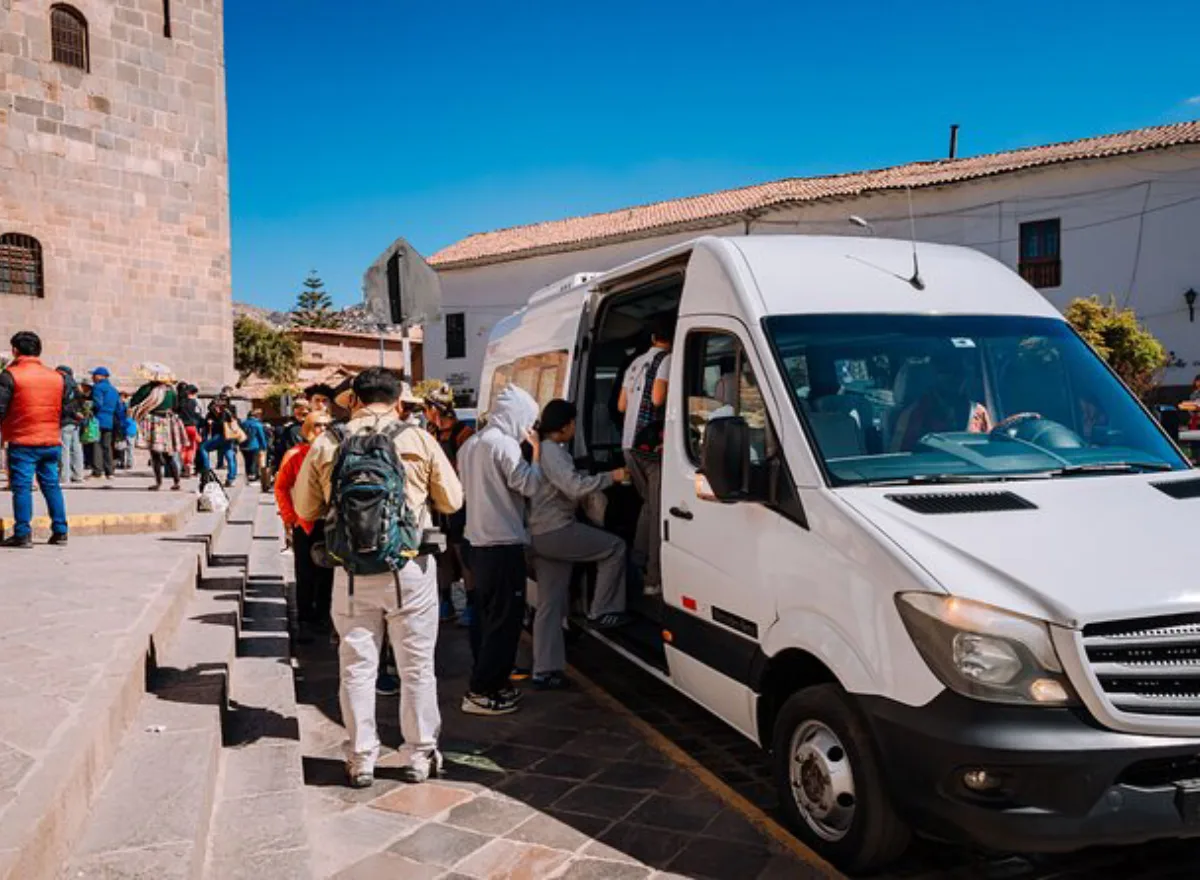
Travelers boarding a tour van to begin an excursion from Cusco.
Remember this:
You do not need to change hotels for every excursion. First determine which accommodation will serve as your main base, and change locations only when it reduces an important transfer or makes the next stage of your trip easier.
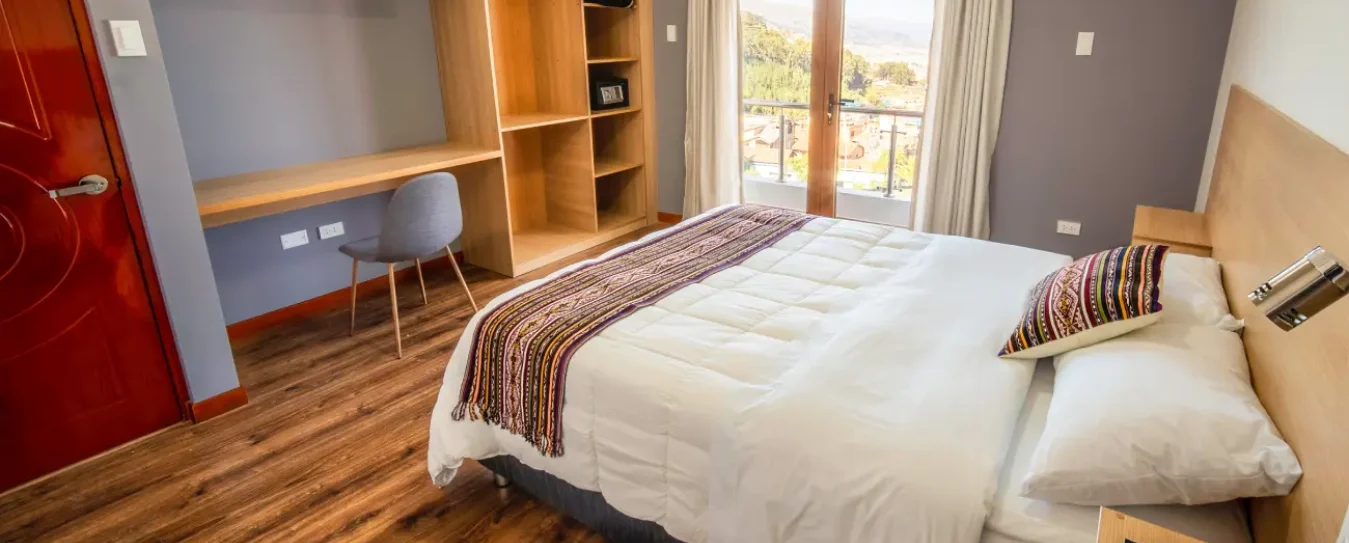
Where to stay for each route in your Cusco itinerary
This initial comparison explains when you can keep one main base and when spending a night at one of the Sacred Valley hotels or in Machu Picchu Pueblo may simplify the route.
| Route | Where to stay | What the hotel should offer | When to change locations |
| City tour and nearby attractions | Cusco city | Access to the center, taxis, and a restful room. | Usually not necessary. |
| South Valley | Cusco city | Vehicle access and a confirmed pickup point. | Only if you will continue to another destination farther south. |
| Vinicunca, Palccoyo, or Humantay Lake | Cusco city | Early pickup access, a quiet room, and hot water. | Staying near the attraction usually does not reduce the transfer enough to justify changing hotels. |
| Maras, Moray, and Chinchero | Cusco or the Sacred Valley | Good road access and breakfast that fits your departure time. | When continuing to Urubamba or Ollantaytambo. |
| Full Sacred Valley route | Cusco, Pisac, Urubamba, or Ollantaytambo | Organized transportation, luggage support, and flexible arrival times. | When spending several days in the valley or taking an early train. |
| Machu Picchu | Cusco, Ollantaytambo, or Machu Picchu Pueblo | Luggage storage, taxi coordination, breakfast, and nonconsecutive nights. | Depending on the station, train schedule, and entrance time. |
| Inca Trail or another trek | Cusco before and after the route | Luggage storage, rest, and nonconsecutive reservations. | According to the starting point provided by the operator. |
| Long stay or remote work | Cusco or the Sacred Valley | Wi-Fi, limited noise, workspace, and nearby services. | When most of your activities will take place inside the valley. |
Define the main base for your Cusco itinerary
The first step is not finding the cheapest room. It is understanding how the tours in your Cusco itinerary connect. Your main base is the accommodation where you will leave most of your luggage and return after several activities.
Before choosing where to stay in Cusco based on your itinerary, identify:
- How many days to spend in Cusco before Machu Picchu and how many nights you will actually sleep in the city.
- Which tours return to Cusco on the same day.
- Which station your train to Machu Picchu departs from.
- Whether your operator picks you up at the hotel or at a meeting point.
- How many days you will be away if you take a multi-day trek.
- Whether you need to store a large suitcase.
- Whether you have an early flight at the end of your stay.
If most of your tours begin and end in the city, keeping one main base prevents repeated luggage transfers and check-ins. Staying outside Cusco adds value when the next stage starts early in the Sacred Valley or when you will continue directly to Machu Picchu.
Cusco itinerary routes that allow one hotel base
City tours, half-day visits, and many full-day excursions allow you to return to the same hotel. For these travel plans, the goal is not to change accommodation but to choose a property with good vehicle access, restful rooms, and easy pickup coordination.
1. City tour and nearby archaeological sites
A Cusco city tour is usually organized as a half-day activity. It may combine urban attractions such as Qorikancha or the Cathedral with nearby archaeological sites, including Sacsayhuamán, Q’enqo, Puka Pukara, and Tambomachay.
These sites are included among the attractions managed through the Cusco Tourist Ticket, although some urban attractions may require separate admission.
For this route, look for a hotel that allows you to:
- Reach the center on foot or by a short taxi ride.
- Coordinate the starting point easily.
- Return without a long transfer.
- Rest on a street with limited nighttime noise.
You do not need to stay directly beside Plaza de Armas. A nearby area with practical taxi access may work better than a central street that vehicles cannot reach.
2. South Valley: Tipón, Pikillaqta, and Andahuaylillas
The South Valley tour usually includes Tipón, Pikillaqta, and the church of Andahuaylillas. Although the route leaves the urban area, it normally allows you to return the same day without moving your luggage.
For this excursion, prioritize:
- Direct access for the tour vehicle.
- A street where the van can stop safely.
- Breakfast that fits the departure schedule.
Accommodation near the Historic Center with vehicle access may be more functional than a property on a pedestrian or narrow street.
3. Apukunaq Tianan, markets, and viewpoints
Visits to Apukunaq Tianan, markets, museums, workshops, and viewpoints can begin from different parts of the city as long as transportation is straightforward.
In these cases, check the actual taxi time and confirm whether the vehicle can reach the entrance. Distance in miles or kilometers does not always reflect the difficulty of a steep or restricted street.
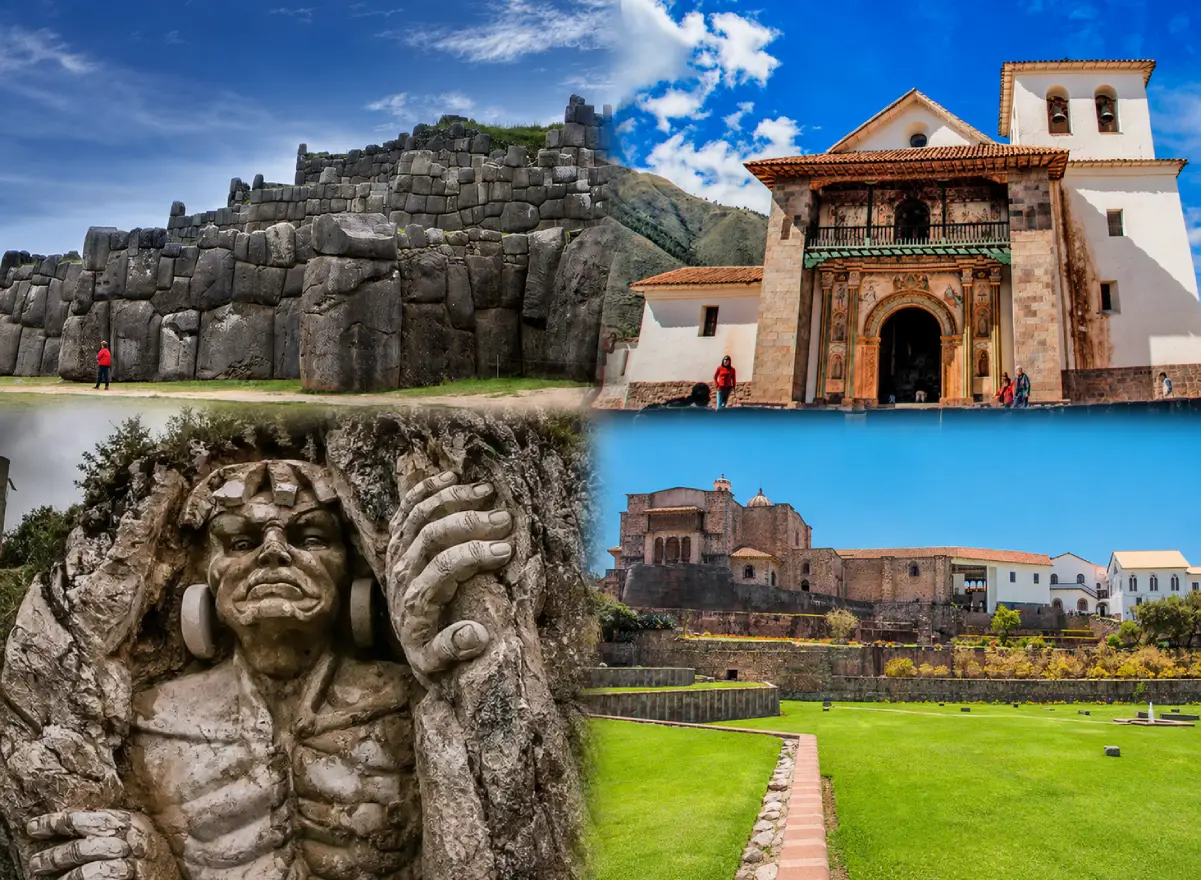
Tourist attractions you can visit on shorter tours from Cusco
4. Vinicunca, Palccoyo, and Humantay Lake
Rainbow Mountain, Palccoyo, and Humantay Lake usually take most of the day, but the tours typically begin and end in Cusco. For this reason, changing hotels simply to move closer to the attraction is usually unnecessary.
For these early departures, look for:
- Vehicle access before sunrise.
- Quiet rooms.
- Clear information about breakfast hours.
- Front desk assistance to confirm the pickup point.
- Enough space to prepare clothing, footwear, and a daypack.
5. Rainbow Mountain or Vinicunca
Vinicunca is far from the city and sits at high altitude. Many tours leave before sunrise and return in the afternoon. Keeping the same hotel makes it easier to rest before and after the excursion.
6. Palccoyo
Palccoyo also requires several hours of transportation. Your hotel needs are similar: quality rest, direct vehicle access, and a comfortable room when you return.
7. Humantay Lake
The visit combines road travel with a hike from Soraypampa. Avoid accommodation that requires you to walk down steep streets, cross pedestrian-only areas, or find transportation on your own before sunrise.
Quick summary:
For tours that return to Cusco on the same day, maintaining one base is usually easier than changing hotels. Prioritize vehicle access, rest, and pickup coordination.
Cusco and Sacred Valley itinerary: when should you stay outside the city?
A Sacred Valley itinerary includes attractions distributed among Chinchero, Pisac, Maras, Moray, Urubamba, and Ollantaytambo. In this part of a Cusco and Sacred Valley itinerary, the decision depends on how many days you will spend in the valley and where your route continues afterward.
A one-day tour can be completed while keeping the same hotel in Cusco. Spending the night in the valley may add value when you have several consecutive visits or when the next day’s train leaves early from Ollantaytambo.
1. Maras, Moray, and Chinchero on one excursion
Maras, Moray, and Chinchero can be visited from Cusco on a half-day or full-day excursion, depending on the number of stops.
Keep your main hotel if:
- You will return after the tour.
- Your next activity takes place in the city.
- You have an upcoming flight.
- You do not want to move luggage for only one night.
2. Pisac for exploring the eastern Sacred Valley
Pisac may work as a base if you plan to spend more time in the eastern entrance of the Sacred Valley, visit nearby communities or markets, and do not need to take an early train from Ollantaytambo.
Before booking, check how you will continue to Urubamba, Ollantaytambo, or the airport if you have an upcoming flight.
3. Urubamba as a base for several days
Urubamba may be convenient if you will dedicate two or more days to the Sacred Valley and have organized transportation. Its location provides connections to Maras, Moray, Ollantaytambo, and other parts of the valley.
It may be less practical if you later need to return for a city tour, visit museums, or catch an early flight from Cusco.
4. Ollantaytambo before the train
Ollantaytambo may be the best choice if your Sacred Valley tour ends there and you will take the train to Machu Picchu the following day. Staying in town prevents you from returning to Cusco only to travel back to the station again.
It also gives you more time to visit the archaeological site and explore the town at a relaxed pace.

Artisan area in Ollantaytambo
5. Signs that changing accommodation makes sense
Staying in the Sacred Valley may simplify your Cusco and Sacred Valley itinerary when:
- You will explore several archaeological sites in the valley at a slower pace.
- Your train leaves early from Ollantaytambo.
- You want to avoid repeated transfers along the same road.
- You want a quieter stay for several days.
- Your route continues directly to Machu Picchu.
Before changing hotels, compare road access, distance to the station, hotel breakfast options for early departures, taxi availability, and luggage storage.
Expert tip:
Do not choose a Sacred Valley hotel only because it appears closer to Machu Picchu. Confirm which station your train departs from and how you will continue your trip after the visit.
Cusco and Machu Picchu itinerary: where to stay before and after your visit
Before finalizing this part of the route, confirm how many nights you will stay in Cusco, the train to Machu Picchu, the departure station, the entrance circuit, the bus transfer to Machu Picchu, and the return time.
Tickets for the Machu Picchu Historic Sanctuary are sold through the official Tu Boleto digital platform. Tickets may also be purchased in person in Aguas Calientes, subject to the official procedures and availability. Before booking accommodation, confirm the transportation you will use.
1. Visit Machu Picchu and return on the same day
This option may work when transportation, train schedules, and entrance times are carefully coordinated.
The hotel should help you confirm:
- Taxi or vehicle access before sunrise.
- Breakfast hours.
- Storage for large suitcases.
- Assistance when you return at night.
- A quiet room for rest.
Proximity to Plaza de Armas is not the only factor. Direct vehicle access to the hotel may be more important.
2. Spend the night in Ollantaytambo
This option may reduce the need for a very early departure when the train leaves from Ollantaytambo. It also connects a Sacred Valley itinerary with Machu Picchu without requiring a return to Cusco between both stages.
Before booking, check:
- The distance between the hotel and the station.
- Whether you can walk there with luggage.
- Breakfast hours.
- How you will return after Machu Picchu.
- Where you will leave your main suitcase.
3. Spend the night in Machu Picchu Pueblo
Staying in Machu Picchu Pueblo may be convenient when you have an early entrance, want to divide the journey, or prefer not to return on the same day. The number of nights and luggage plan may also change when using the Hydroelectric route to Machu Picchu.
Carry only the luggage you need. PeruRail and Inca Rail publish specific carry-on baggage limits, so review their current policies before traveling.
Multi-day treks: use your Cusco hotel as your main base
Before the Inca Trail, Salkantay, Lares, or another trek, your hotel serves as a place to organize your backpack, review an Inca Trail packing list, leave your main luggage, and rest after the route.
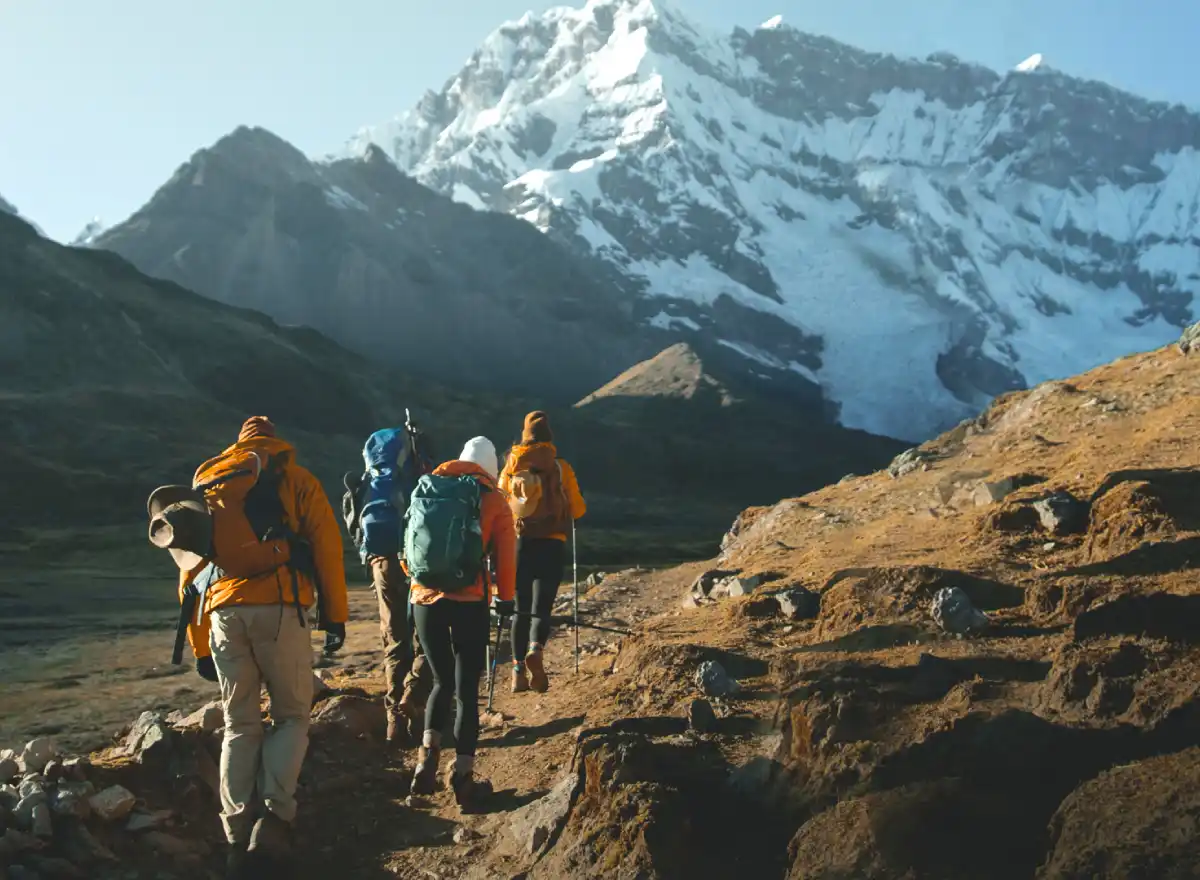
Multi-day trek in the Andes
Before booking, ask:
- Whether you can leave luggage for several days.
- Whether the service has a fee or time limit.
- Whether you can book one night before and another after the trek.
- What time breakfast is served.
- Which front desk hours apply, especially if you return at night.
1. Inca Trail
Before the Inca Trail, spending a night in Cusco is often useful for preparing your luggage, receiving instructions from the operator, and storing items you will not carry on the route.
The Inca Trail network may close for conservation and maintenance. Review announcements from SERNANP and Peru’s Ministry of Culture before confirming your trip.
2. Salkantay, Lares, and other routes
The pickup time and location depend on the operator. Do not book only because a hotel is near Plaza de Armas. Confirm whether the operator will pick you up at the property or require you to reach a specific meeting point.
After a trek, a room with a private bathroom, hot water, a comfortable bed, and limited noise may offer more value than an excessively central location.
Long stays or remote work: prioritize daily comfort
If you will stay five nights or more, your accommodation choice should consider more than tourist departures. Check the distance to restaurants, stores, laundromats, taxis, and everyday services.
For remote work, confirm:
- Wi-Fi speed and reliability.
- A desk or suitable work surface.
- Noise levels during the day and at night.
- Cell phone reception.
- Available electrical outlets.
- Nearby dining options.
- Availability and conditions for extending the reservation.
Cusco city may be more practical if you will combine work with urban visits and different tours. Urubamba may work if most of your stay focuses on the Sacred Valley and you have reliable transportation.
What to confirm with the hotel before booking
- Can the tour vehicle reach the entrance?
- Can I leave luggage while visiting Machu Picchu or completing a trek?
- Does luggage storage have a fee?
- What time is breakfast served?
- Is there an alternative for early departures?
- Can I reserve nonconsecutive nights?
- What happens if I return late?
- Does the rate include taxes and services?
Mistakes that can complicate your Cusco trip itinerary
- Booking before checking the train station, not every service departs from the same location.
- Changing hotels without saving meaningful time, keep one main base whenever it works for the tours in your Cusco itinerary.
- Choosing a central street without vehicle access, a central location may be inconvenient if you must walk farther to reach transportation.
- Assuming every operator picks up at the entrance, pickup arrangements depend on the street, tour type, and operator conditions.
- Ignoring the luggage policy, this can complicate a Machu Picchu visit or multi-day trek, so confirm the rules in advance.
- Failing to book a return night, an additional night gives you time to rest and recover, especially before a flight home.
Ayni Cusco Hotel as a main base for different itineraries
Ayni Cusco Hotel can be considered as a base for travelers taking city tours, half-day excursions, and full-day tours that return to Cusco.
The hotel is located in Santa Ana and offers services such as buffet breakfast, Wi-Fi, and complimentary airport transportation. It also has single, double-bed, twin, and triple rooms.
It may work for travelers who:
- Plan to take a city tour or visit the South Valley.
- Will return after exploring the Sacred Valley.
- Will visit Vinicunca, Palccoyo, or Humantay Lake.
- Need a hotel base before or after Machu Picchu.
- Travel as a couple, family, or small group.
- Prefer to rest outside the busiest streets.
Before booking, ask directly about breakfast hours, luggage policies, taxi coordination, and whether your operator can pick you up from the hotel.
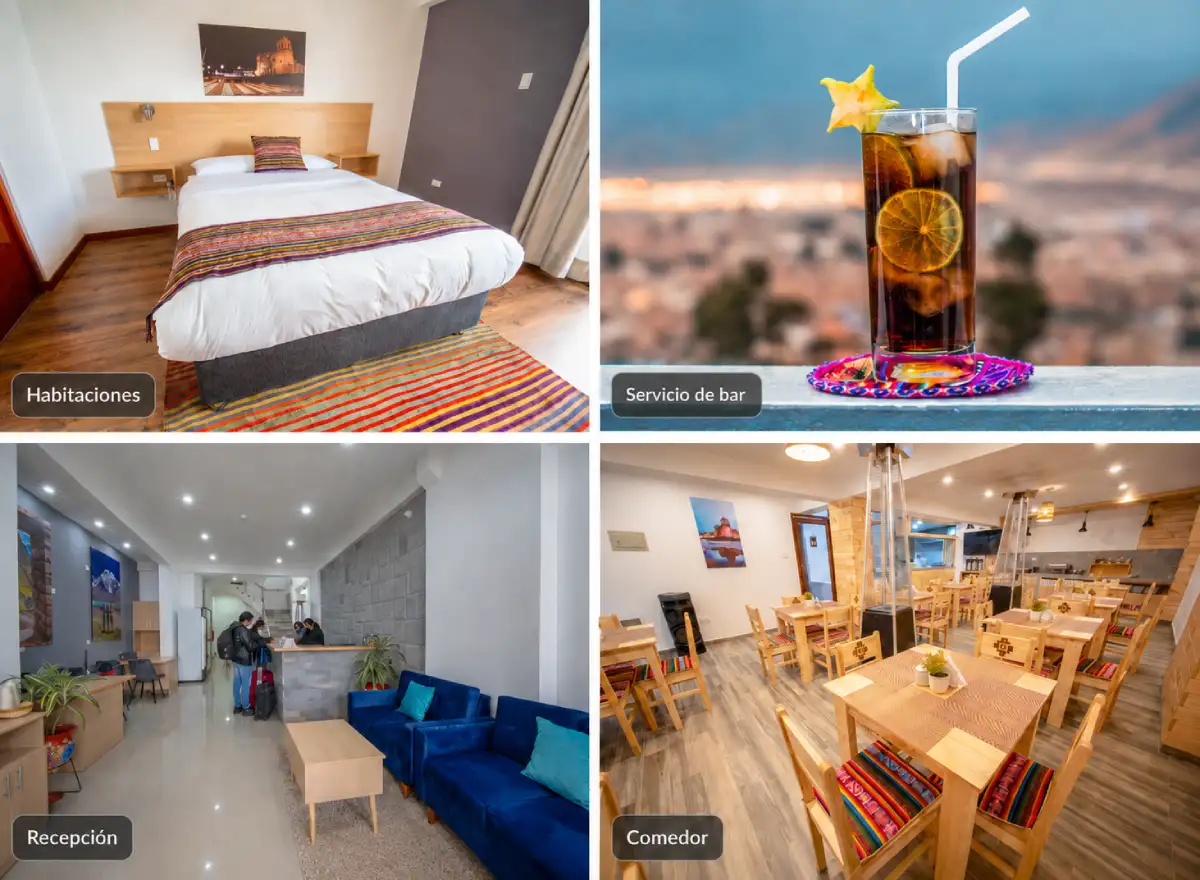
Main services and facilities at Ayni Cusco Hotel
You can review the available rooms and services published by the hotel.
Before booking:
Send the hotel your travel dates, tour names, and pickup and return times. This allows the staff to confirm whether breakfast, pickup access, taxis, and luggage storage fit your itinerary.
Choose one hotel base for your Cusco itinerary and avoid unnecessary transfers
If most of your tours leave from Cusco and return the same day, keeping one hotel as your main base can help you avoid repeated check-ins, luggage transfers and unnecessary movement. For early trains or routes through the Sacred Valley, one night in Urubamba, Ollantaytambo or Aguas Calientes may be useful.
If you prefer to stay in Cusco, Ayni Cusco Hotel in Santa Ana can be an option for resting, having breakfast at the hotel and coordinating departures away from the busiest part of the center. To complete your plans, you can also review Cusco and Machu Picchu tours before closing your itinerary.

- Tours Starting From 1 Day
- Up to 40% OFF
Frequently asked questions about where to stay in Cusco based on your itinerary
What information should I send the hotel before booking if I already have tours?
How can I confirm whether my tour can pick me up at the hotel?
What should I check if my train leaves from Poroy or Ollantaytambo?
What should I ask if I am booking nonconsecutive nights?
How can I calculate whether changing hotels actually saves time?
What should I confirm if I return late after a tour?
What conditions should a luggage storage service meet?
What should I check before an early departure to Vinicunca, Humantay, or a trek?
What happens if the hotel is on a street with limited vehicle access?
Which matters more for a Cusco itinerary: distance from the center or vehicle access?

OUR GUESTS ON TRIPADVISOR
- 1
- 2
- 3
- 4
- 5
RATED 5 OUT OF 5 (+500 REVIEWS)
 Beers were very good. Pizza was very tasty as well. Me and the wife split 2 smalls. We were full. I definitely want to got back for the ice cream.... read more

 John H
27 de May de 2022
 Lots of choices. I especially liked the Bomb Pop flavored sour. Interior is cool with big center cut cypress tables in the middle. No issues with having my 12 year... read more
 Mike G
21 de July de 2021
 Food was good, not the best I've ever had, but definitely above average. Had a pretzel with warm beer cheese, chicken pesto, and a patriarch. Wasn't busy on a Monday... read more
 RPs-mama
13 de June de 2022
Stopped in for surprisingly good pizza and great beer! Very enjoyable lunch, and will definitely come back
 ltkacs
14 de April de 2021